

EMDR Therapy in Collegeville, PA
Some things can’t be talked through. They have to be processed.
EMDR Therapy | Virtual and In-Person in Collegeville, PA
You've probably already tried talking about it. Maybe for years. You understand what happened, maybe even why it happened, and why it still affects you. But understanding doesn't make it stop. You still feel it in your body. You still get triggered. The gap between what you know and how you feel stays stubbornly wide.
EMDR is a different kind of therapy. It works with the part of you that talk hasn't been able to reach: the nervous system, the body, the way your brain stored what happened. It's structured, evidence-based, and for many people, it creates movement where nothing else has.
What Is EMDR?
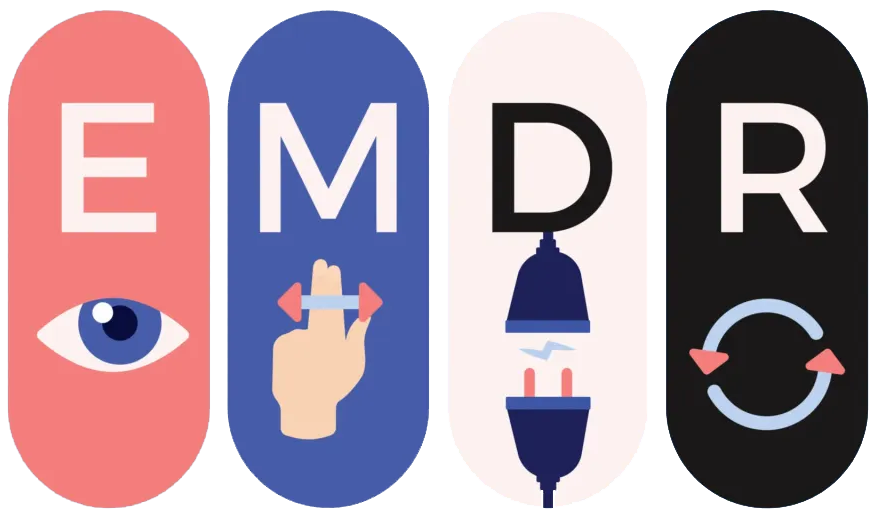
EMDR stands for Eye Movement Desensitization and Reprocessing. It's a mouthful, and the name doesn't do it justice. Here's what it actually is: a therapy that helps your brain finish processing experiences it got stuck on.
When something overwhelming happens, the brain sometimes can't fully integrate it. The memory gets stored in a fragmented, emotionally charged way. Your nervous system keeps treating it as an active threat because, neurologically, it never got filed away as something that's over. That's why trauma doesn't feel like a memory. It feels like now.
EMDR uses bilateral stimulation, typically guided eye movements, to activate both hemispheres of the brain simultaneously. This mimics the natural memory processing that happens during REM sleep. It doesn't erase what happened. It helps your brain store it differently, so the memory retains its facts but loses its grip.
What Does the Research Say?
EMDR is one of the most thoroughly studied trauma treatments available. It's endorsed by the World Health Organization, the American Psychological Association, the Department of Veterans Affairs, and the Department of Defense. More than 30 randomized controlled trials have demonstrated its effectiveness for PTSD.
Research also consistently shows that EMDR achieves results faster than many traditional approaches, including trauma-focused CBT, for many clients. It works for a single traumatic event and for the layered, complex trauma that built up over time.
We say this not to oversell it. No therapy works for everyone. But if you've been sitting with something for years and nothing has moved it, this is a legitimate option worth knowing about.
What Can EMDR Therapy Help With?
EMDR is most known for trauma and PTSD, but its application is broader than that. At coeo, we use EMDR to address:
PTSD and complex PTSD | Childhood and developmental trauma | Relational and attachment trauma | Sexual trauma | Anxiety and panic | Phobias | Grief and loss | Medical trauma | Negative core beliefs about yourself | Performance anxiety | Identity-based and racial trauma
If something happened and you haven't been the same since, that's worth exploring in EMDR.

Signs You Might Be Living with Unprocessed Trauma
Not everyone who’s been through something hard identifies as having trauma. Many people come to us wondering if what they’re experiencing is real, or wondering if they’re making it up. They’re not. Here’s what we hear often:
• You feel stuck in the past, even when you’re trying to be present.
• Flashbacks, intrusive thoughts, or the sense that you’re reliving something rather than remembering it. Time doesn’t seem to have put the right kind of distance between you and what happened.
• Your body reacts before your brain catches up.
• Heart racing in a meeting. Freezing when someone raises their voice. Exhaustion that sleep doesn’t fix. Somatic symptoms, physical sensations tied to emotional history, are often the first language trauma speaks.
• You feel numb, disconnected, or like you’re watching your life from the outside.
• Dissociation is the nervous system’s way of protecting you from what’s too overwhelming to feel. It works until it doesn’t.
• Relationships feel unsafe, even the ones that should be easy.
• Difficulty trusting people. Bracing for abandonment. Swinging between clinging and pulling away. Trauma lives in relationship because, for most of us, it began there.
• You’ve been told everything is fine, but you don’t feel fine.
Life can look functional on the outside while something underground remains unresolved. That gap between how things look and how they feel is worth paying attention to.
The Eight Phases of EMDR: What to Expect
EMDR is a structured protocol, which is part of what makes it so effective. Your therapist isn’t winging it. Here’s how the work unfolds:
Phase 1: History Taking and Treatment Planning
Your therapist gets to know you: your history, what you’re carrying, what you want to change. Together you identify the targets for processing, the memories, beliefs, or patterns at the root of what’s keeping you stuck.
Phase 2: Preparation
Before any processing happens, you develop internal resources. Calming techniques, grounding skills, places of safety in your imagination. This phase is not a formality. It’s what makes the deeper work possible without destabilizing you.
Phase 3: Assessment
You identify a specific memory, image, or experience to work with. You name the negative belief it reinforces (something like “I’m not safe” or “it was my fault”), the emotion and body sensation that comes with it, and the positive belief you want to be able to hold instead.
Phases 4-6: Desensitization, Installation, Body Scan
This is the core processing work. Your therapist guides you through sets of bilateral stimulation while you let your mind go where it goes. You’re not asked to relive anything in detail. You hold the memory lightly while the processing does its work. Then the positive belief is strengthened and installed. Then a body scan checks for any lingering tension or charge.
Phase 7: Closure
Every session ends with a return to stability. Your therapist ensures you leave grounded, even if the work isn’t complete. Incomplete sessions are normal and safe.
Phase 8: Reevaluation
The following session begins by checking in on what shifted. Processing often continues between sessions, in dreams, in moments of unexpected clarity. Reevaluation guides where the work goes next.

Meet Kristen Czech, LMFT, MSN, RN, CRNP:
coeo's EMDR Therapist
Kristen (she/her)
Kristen Czech is a Licensed Marriage and Family Therapist, co-founder of coeo, and our primary EMDR therapist. She is EMDRIA Certified, an AAMFT Clinical Fellow, and a Clinical Trauma Professional. She specializes in trauma, PTSD, and the relational patterns that trauma tends to shape over time.
Kristen works from an attachment-based, trauma-informed framework. That means the therapeutic relationship is central to everything, not just a nice backdrop for the technique. She brings warmth, directness, and a deep understanding of how the body and mind hold experience together.
She is trained in EMDR, Internal Family Systems (IFS), and somatic approaches, which means she can draw on multiple modalities depending on what your nervous system needs. In practice, this makes the work both more flexible and more effective.
Kristen sees clients for EMDR in person in Collegeville, PA and virtually across Pennsylvania.
Meet Kristen Czech, LMFT, MSN, RN, CRNP: coeo's EMDR Therapist
Kristen (she/her)
Kristen Czech is a Licensed Marriage and Family Therapist, co-founder of coeo, and our primary EMDR therapist. She is EMDRIA Certified, an AAMFT Clinical Fellow, and a Clinical Trauma Professional. She specializes in trauma, PTSD, and the relational patterns that trauma tends to shape over time.
Kristen works from an attachment-based, trauma-informed framework. That means the therapeutic relationship is central to everything, not just a nice backdrop for the technique. She brings warmth, directness, and a deep understanding of how the body and mind hold experience together.
She is trained in EMDR, Internal Family Systems (IFS), and somatic approaches, which means she can draw on multiple modalities depending on what your nervous system needs. In practice, this makes the work both more flexible and more effective.
Kristen sees clients for EMDR in person in Collegeville, PA and virtually across Pennsylvania.
EMDR at coeo: What Makes It Different
A lot of practices offer EMDR. What we’d want you to know about working with us specifically:
We don’t rush the preparation phase.
Some therapists move too quickly into processing before clients have the internal resources to handle it. We don’t. The preparation work is foundational, and we take it seriously.
We integrate other modalities.
EMDR doesn’t happen in isolation at coeo. Kristen draws on somatic awareness, IFS, and attachment principles throughout. Your whole nervous system is involved, not just your eye movements.
We’re honest about what it will be like.
EMDR can surface things before it settles them. That’s part of the process, not a sign something’s wrong. We’ll prepare you for that and be with you through it.
We’re a private pay practice.
We don’t accept insurance directly, which means your treatment isn’t dictated by session limits or diagnostic requirements. We provide superbills for clients who want to pursue out-of-network reimbursement.
EMDR Therapy vs. EMDR Intensive: What's the Difference?
Standard EMDR at coeo happens in regular weekly or biweekly sessions, each 50 to 90 minutes. This is the right fit for most people, especially if you’re new to EMDR, working through ongoing life stressors alongside trauma, or prefer a slower, more integrated pace.
An EMDR Intensive is an extended, concentrated format where you do several hours of EMDR work across consecutive days. It’s designed for people who want to move more quickly through specific traumatic material, who’ve already done foundational therapeutic work, or whose schedules don’t accommodate weekly sessions.
Let's Connect
If you’re looking for an EMDR therapist near Collegeville or Philadelphia’s western suburbs, we’d love to connect. Fill out our contact form, and a coeo team member will reach out to learn more about what you’re looking for. We’ll schedule a free 15-min consultation or connect you directly with a therapist.
Frequently Asked Questions
Does EMDR work for everyone?
No therapy works for everyone, and we won’t pretend otherwise. EMDR is highly effective for many people with trauma and PTSD, but it requires a degree of preparation and stabilization first. During our consultation, we’ll have an honest conversation about whether it’s a good fit for where you are right now.
Do I have to talk about what happened in detail?
No. That’s one of the most common misconceptions about EMDR. You don’t have to narrate your trauma in detail for the processing to work. You hold the memory while the bilateral stimulation does its job. Your therapist follows your lead.
How many sessions will I need?
It depends on what you’re processing, how complex it is, and how your nervous system responds. A single trauma with a clear onset might resolve in eight to twelve sessions. Complex or developmental trauma typically takes longer. We’ll give you an honest picture as we go.
What does EMDR feel like?
People describe it differently. Some sessions feel like rapid downloading, like pieces falling into place. Others feel quieter, more gradual. Some people cry. Some feel nothing during the session and notice shifts in the days after. Processing continues between sessions, and your therapist will help you understand what to expect.
Can EMDR make things worse?
It can stir things up, especially early in the process. That’s normal and expected. Your therapist is trained to manage pacing carefully and ensure you leave every session in a regulated, grounded state. If something isn’t working, we adjust.
Is EMDR available online?
Yes. We offer virtual EMDR via telehealth across Pennsylvania. Research supports online EMDR as similarly effective to in-person, and we’ve refined our approach to make the experience feel genuinely connected.
Ready to Find Out if EMDR Is Right for You?
Start with a free 15-minute consultation. No commitment, no pressure. Just a real conversation about what you’re looking for and whether we can help.
Fill out our contact form and a member of the coeo team will reach out to schedule your consultation. Or call us directly at (215) 360-3308, or email team@coeocommunity.com.
