OCD Therapy
Expert, Compassionate, Virtual OCD Treatment online across Pennsylvania
Living with OCD can feel isolating and overwhelming.
Your mind generates intrusive thoughts that feel urgent and real, triggering powerful urges to check, seek reassurance, or avoid situations entirely. While these compulsions bring temporary relief, they ultimately strengthen OCD's grip on your life. But here's the things, recovery is definitely possible. Through evidence-based treatment like Exposure and Response Prevention (ERP) and Acceptance and Commitment Therapy (ACT), you can break free from OCD's cycle and reclaim your life.
You are not your thoughts. You are not broken. And you are capable of change.
Let's get started →

Our Approach to OCD Therapy:
ERP with a little ACT
Exposure and Response Prevention (ERP) is the gold-standard treatment for OCD. It’s a form of cognitive-behavioral therapy that helps you gradually face the thoughts, images, or situations that trigger anxiety (exposure), while resisting the urge to perform compulsions. Over time, this process retrains your brain to tolerate uncertainty and reduces the power OCD has over your life. ERP doesn’t aim to eliminate anxiety, it helps you learn that you can handle it, and that you don’t need rituals to feel safe.
Adding Compassion and Meaning: The ACT Approach
We integrate Acceptance and Commitment Therapy (ACT) alongside ERP. ACT helps you relate differently to your thoughts and emotions, noticing them without judgment, instead of fighting or avoiding them.
It also focuses on values: What kind of person do you want to be? What matters most to you? By connecting with your values, you find motivation to face discomfort in service of something bigger. We’re talking your freedom, your relationships, your life.
What Recovery Actually Looks Like
Recovery isn’t about never feeling anxious again. It’s about learning to live fully and respond flexibly to your inner experiences, including those intrusive thoughts. We believe healing isn’t something we do to you; it’s something we cultivate with you.
Here’s what that looks like in practice:
• ERP that doesn’t feel robotic – Yes, we follow evidence-based practices, but we also remember you’re a whole, complex human, not a diagnosis
• Space for the full experience – The fear, the frustration, the dark humor that sometimes shows up when your brain is being ridiculous
• No pathologizing your humanness – OCD is real and hard, but we’re not interested in reducing you to your symptoms
• Presence over scripts – We show up as real humans, not therapists hiding behind professional facades

Our Approach to OCD Therapy:
ERP with a little ACT
Exposure and Response Prevention (ERP) is the gold-standard treatment for OCD. It’s a form of cognitive-behavioral therapy that helps you gradually face the thoughts, images, or situations that trigger anxiety (exposure), while resisting the urge to perform compulsions. Over time, this process retrains your brain to tolerate uncertainty and reduces the power OCD has over your life. ERP doesn’t aim to eliminate anxiety, it helps you learn that you can handle it, and that you don’t need rituals to feel safe.
Adding Compassion and Meaning: The ACT Approach
We integrate Acceptance and Commitment Therapy (ACT) alongside ERP. ACT helps you relate differently to your thoughts and emotions, noticing them without judgment, instead of fighting or avoiding them.
It also focuses on values: What kind of person do you want to be? What matters most to you? By connecting with your values, you find motivation to face discomfort in service of something bigger. We’re talking your freedom, your relationships, your life.
What Recovery Actually Looks Like
Recovery isn’t about never feeling anxious again. It’s about learning to live fully and respond flexibly to your inner experiences, including those intrusive thoughts. We believe healing isn’t something we do to you; it’s something we cultivate with you.
Here’s what that looks like in practice:
• ERP that doesn’t feel robotic – Yes, we follow evidence-based practices, but we also remember you’re a whole, complex human, not a diagnosis
• Space for the full experience – The fear, the frustration, the dark humor that sometimes shows up when your brain is being ridiculous
• No pathologizing your humanness – OCD is real and hard, but we’re not interested in reducing you to your symptoms
• Presence over scripts – We show up as real humans, not therapists hiding behind professional facades

What to Expect During OCD Therapy at coeo
Understand Your Unique Pattern
No two brains spiral the same way. We’ll explore how OCD shows up specifically for you, without forcing your experience into a one-size-fits-all box.
Challenge Without Retraumatizing
We’ll build exposures that meet you where you are and push back against the obsessions in a way that feels doable, not destructive.
Reclaim Your Freedom
Through response prevention practice in your real-world settings, we’ll help you reconnect with the freedom of being fully alive, even when your brain is loud.

Investing in your care
We operate as a private-pay practice, which means we choose to not bill insurance directly. Private pay aligns with our values and means we answer to you, not them. It means we can offer the personalized care you deserve. Longer sessions if needed, treatment plans that evolve with you, not with arbitrary session limits. No diagnoses weaponized in permanent records. No justifying your humanity to meet “medical necessity” criteria. Just real therapy, built around your actual needs. We also provide superbills you can submit for out-of-network reimbursement, and help you navigate that process.
We also provide superbills you can submit for out-of-network reimbursement, and help you navigate that process.
Learn more about the Benefits of Private Pay Therapy →
Reduced-Fee Options: We also hold a limited number of reduced-fee slots because we believe healing shouldn’t only be accessible to people with disposable income. If cost is a barrier, let’s talk. We’d rather work something out than have you go without the support you deserve. We also offer therapy with highly trained graduate interns at a reduced rate per session. This option provides more affordable access to care while offering interns strong clinical supervision and support.
Click here to schedule a free consultation call to discuss rates →
Who Can Benefit from ERP Therapy?
If…
You spend hours each day stuck in repetitive thoughts or behaviors that you know don’t make logical sense, but you can’t stop
Your brain keeps serving up intrusive thoughts that feel disturbing, taboo, or completely at odds with who you are as a person
You’re exhausted from the constant loop of obsession → anxiety → compulsion → temporary relief → repeat
You’re keeping your intrusive thoughts secret because you’re terrified of what people would think if they knew
You’re tired of your brain being the loudest voice in the room, and you’re ready to challenge it
- Contamination fears
- Intrusive thoughts
- Checking behaviors
- Symmetry and ordering compulsions
- Harm obsessions
- Relationship OCD (ROCD)
- Other OCD presentations
…let’s chat. Your OCD doesn’t need to keep running your life.
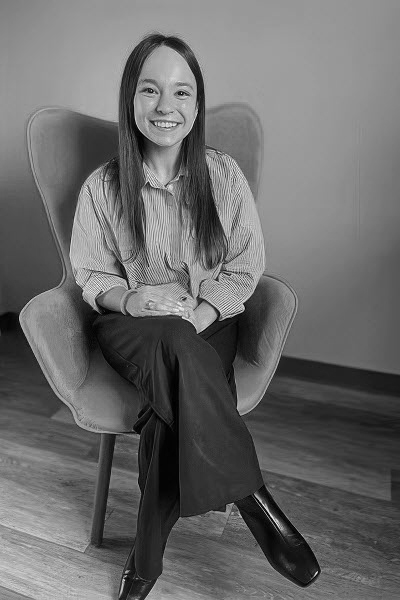
What Our Therapist Wants You To Know
-
You don't need to eliminate intrusive thoughts to get better. We actually can't control our thoughts or emotional reactions, and that's okay. Recovery isn't about achieving perfect calm or silencing your mind. It's about responding to uncomfortable thoughts and feelings with more flexibility and compassion.
-
Progress looks different than you might expect. ERP works gradually, and healing often means learning to live with uncertainty and doubt rather than waiting for them to disappear. Small shifts in how you relate to anxiety add up to profound changes in your life.
-
Your intrusive thoughts don't define you. Having disturbing or unwanted thoughts doesn't make you dangerous or bad. They're a symptom of OCD, not a reflection of your character or intentions.
-
Your world doesn't have to stay small. OCD may have narrowed your life, but with the right tools, compassion, and guidance, you can begin to step toward the life you want. One that's guided by your values, not your fears.
What is Exposure Response (ERP) Therapy?
Exposure and Response Prevention (ERP) is a highly effective, evidence-based approach to treatment, most often used for individuals experiencing Obsessive-Compulsive Disorder (OCD) and various anxiety disorders. It is one of the specialized therapeutic approaches we use here at coeo.
ERP works by helping you gradually face the things you fear, while intentionally choosing to prevent your typical, habitual response. This process is centered on building new learning in your brain and body.
ERP therapy has two main components:
Exposure
This involves slowly and intentionally confronting the thoughts, situations, or objects that trigger your anxiety or obsessions. We start small and work up to harder exposures together, at a pace that honors your nervous system.
1
Response Prevention
This crucial part involves making a choice to resist performing your usual compulsive behaviors or rituals. It’s about learning to stay with the discomfort and anxiety until it naturally decreases. We help you find the courage to pause and allow the anxiety to dissipate on its own, without resorting to your safety behaviors.
2
The goal isn’t to eliminate all anxiety; it’s to teach your brain that the things you fear aren’t actually dangerous and that you can tolerate the uncertainty and discomfort without needing to “fix” it. This builds a deeper sense of self-trust and emotional agency.
Ready to Start?
We won’t pretend this is easy work. But we will show up with you, in it, without judgment or pretense. Because connection is the intervention, and you don’t have to do this alone.
Stories from clients who worked with Nadia
Frequently Asked Questions
Is ERP (Exposure and Response Prevention) the best therapy for OCD?
ERP is widely recognized as the gold-standard treatment for OCD, and for good reason. It’s highly effective at breaking the cycle of obsessions and compulsions. At coeo, we use ERP as our primary approach because it retrains your brain to tolerate uncertainty and reduces the power OCD has over your life. We also integrate Acceptance and Commitment Therapy (ACT) to help you relate differently to your thoughts and emotions, and to reconnect with what matters most to you. Recovery isn’t about eliminating anxiety. It’s about learning that you can handle it without needing rituals to feel safe.
What does ERP therapy actually involve?
Is OCD something you can fully recover from?
Recovery is definitely possible, though it looks different than you might expect. Recovery isn’t about never feeling anxious again or achieving perfect calm. It’s about learning to respond to uncomfortable thoughts and feelings in new, more flexible ways. And it’s important to know that obsessions don’t just trigger anxiety. They can bring up disgust, guilt, fear, shame, doubt, and other difficult emotions too. Many people find that with ERP and the right support, OCD no longer runs their life. They can live fully, pursue their values, and handle intrusive thoughts without getting caught in the cycle. Sometimes the discomfort naturally decreases over time (what we call habituation), but that’s more of a welcome side effect than the goal. The real goal is building new patterns of relating to all these uncomfortable emotions and uncertainty. These small shifts in how you respond add up to profound changes in your life, changes that free you to live according to your values, not your fears.
Does therapy really work for OCD?
Yes. ERP is one of the most researched and effective treatments for OCD. It works by gradually retraining your brain to tolerate uncertainty and resist compulsions, which weakens OCD’s grip over time. At coeo, we don’t just follow evidence-based practices. We remember you’re a whole, complex human, not a diagnosis. We create a space where you can bring all of it: the intrusive thoughts you’re terrified to say out loud, the rituals that fill you with shame, and the exhaustion of fighting your own brain every day.
Is ERP effective through telehealth?
Absolutely. Research shows that ERP delivered through telehealth is just as effective as in-person treatment. In fact, virtual sessions have some unique advantages. You can practice response prevention in your real-world settings, which makes the work more practical and relevant to your daily life. Our OCD therapist at coeo is fully virtual and brings the same compassionate, evidence-based care through online sessions. You’ll get personalized support from the comfort of your own space, making it easier to stay consistent with treatment.
Can I do OCD therapy online in Pennsylvania?
Yes! Our OCD therapist at coeo provides virtual therapy to anyone across Pennsylvania. Whether you’re in Philadelphia, Pittsburgh, or anywhere in between, you can access expert, compassionate ERP treatment from wherever you feel most comfortable. All you need is a private space and a reliable internet connection. We’ll work together to build exposures, challenge compulsions, and help you reclaim your freedom, all through secure, confidential telehealth sessions.
